Free site survey and quote +420 605 292 387 info@nabijecky-praha.cz CZ EN
Prague and surrounding area · houses, apartment buildings and businesses

Wallbox installation, fully handled — from site survey to inspection report

An EV charger is more than a box on the wall. It needs a dedicated protected circuit, the correct type of residual current device, cabling run properly to the consumer unit, a commissioning inspection, and paperwork filed with the grid operator. We arrange all of it — you get one price and one date.

1 daytypical install at a house
30 kmfrom Prague
7.4–22 kWpower ranges we cover
24h
we contact you and offer the nearest available survey slot

What you get from us

Not a guess over the phone. A firm quote after a site visit.

  1. A placement and cable-route plan — where the wallbox makes sense and how the supply gets to it
  2. One final price — materials, labour, inspection and paperwork in a single figure
  3. A capacity check — whether your breaker and supply can actually take it
  4. A grants overview — what's currently open and whether you qualify
Qualified electrician Installation is carried out by our partner electrician, certified under Government Regulation No. 194/2022 Coll.
Commissioning inspection Our certified inspection technician issues the commissioning report — without it your insurance may not pay out.
Paperwork handled We file the grid-connection or capacity-increase request with PREdistribuce on your behalf.
We clean up after ourselves Dust-extracted drilling, floors covered, holes made good. The site is left clean.
Who it's for

Three situations, three different jobs

A wallbox in a house garage, ten bays in an apartment building's underground car park, and a business car park are three completely different projects. We arrange all three.

Segment 01

Detached & terraced houses

Our most common job. A wallbox in the garage, on the wall by the parking spot, or on a pedestal at the driveway.

  • Single-phase 7.4 kW or three-phase 11 and 22 kW
  • Dynamic load management so the main breaker doesn't trip
  • Integration with solar PV — charging from surplus generation
  • Usually finished in a single day
Wallbox for a house — price, grants and how it works →

Segment 02

Apartment buildings & HOAs

The most complex case, but a solvable one. The key is a design that already accounts for more chargers arriving in two years' time.

  • Assessment of the building's main supply capacity
  • Backbone wiring ready for bays to be fitted out one by one
  • Sub-metering — everyone pays for their own consumption
  • Installation once the HOA has approved it — you arrange the consent
Segment 03

Businesses & premises

Charging for fleet cars, an employee benefit, or bays for customers.

  • Multiple charging points with load sharing
  • User identification by card or app
  • Records ready for billing and depreciation
  • Fitted in as part of a car park refit
What's behind the price

Installing a wallbox isn't "screw a box to the wall"

Most of the work happens inside the wall and inside the consumer unit — the parts you never see afterwards. Here's what actually happens at your property.

01

Checking the supply and main breaker

We work out how much current you have spare and whether your reserved capacity needs increasing. An 11 kW wallbox draws roughly as much as an electric cooker running flat out.

02

A dedicated circuit in the consumer unit

The wallbox needs its own protected circuit — it can't share one with your sockets. Sometimes the consumer unit itself needs extending or replacing.

03

The correct type of RCD

EV charging can produce a DC fault current that a standard RCD won't detect. That's why the relevant standard calls for a Type B device, or a Type A combined with 6 mA DC detection — either built into the wallbox or fitted separately.

04

Cable routing, drilling and making good

The technician runs the supply from the consumer unit to the wallbox — in trunking, under plaster, through a wall, or in a buried conduit. Drilling is dust-extracted and any penetrations are made good.

05

Mounting, wiring and configuration

Fitting to the wall or pedestal, wiring, setting the current limit and dynamic load management, pairing with the app, and a test charge with your own car.

06

Commissioning inspection and handover

Our inspection technician takes the required measurements and issues the commissioning report. Without it, your insurer may not pay out if something goes wrong. You get it along with the manual and warranty card.

How it works

From phone call to a charged car

You don't need to deal with the grid operator or find an inspection technician yourself. We manage the whole chain.

Get in touch

Call or fill in the form. We'll ask about your car, where you park, and your main breaker rating.

within 24 hours

Site survey

We visit, inspect and photograph the consumer unit and propose a placement and cable route.

free of charge

Quote

One final price, broken down into materials, labour and inspection. No "from... to..." ranges.

within 3 days

Paperwork

We file the request with the grid operator. In apartment buildings we install once the HOA has given consent.

handled for you

Installation

Install, test charge, inspection report and a walkthrough of how it works.

1 day
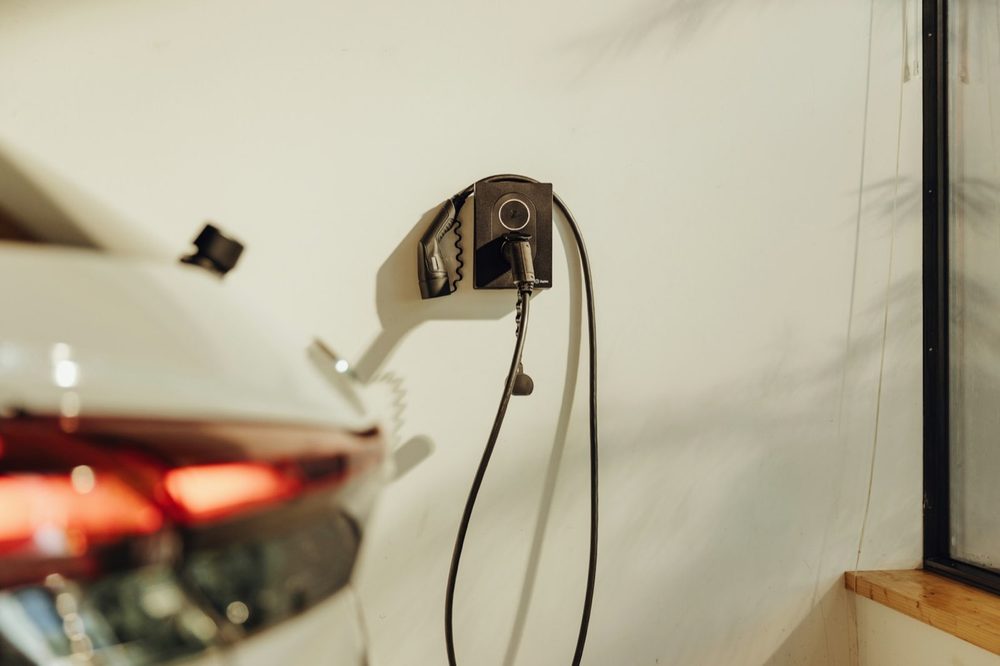
A wallbox on a garage wall with the cable coiled beside it and a car parked in front
This is how it should look when we leave: charger on the wall, cable coiled, nothing in the way.
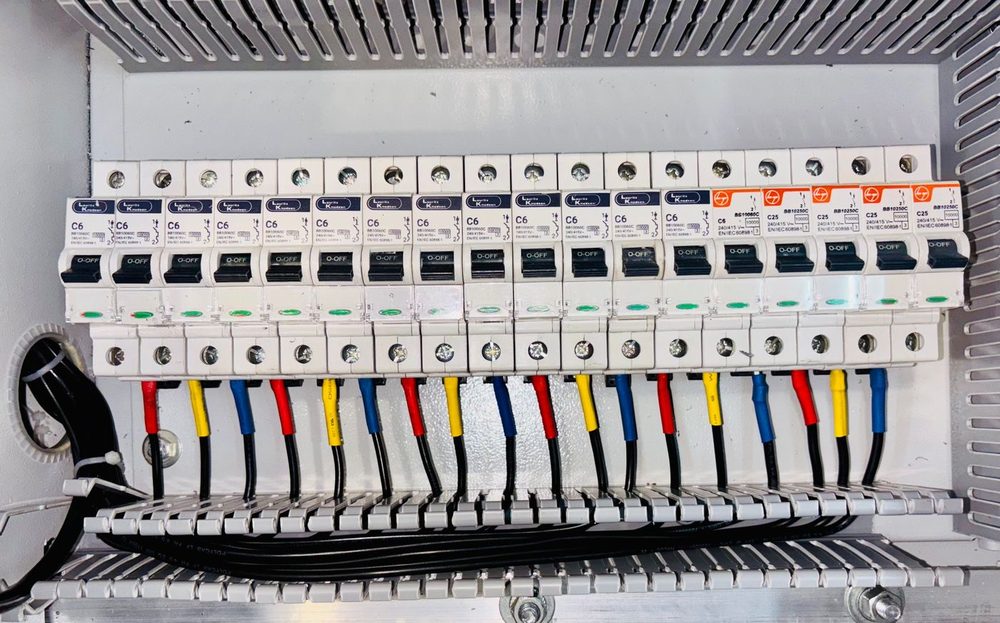
A consumer unit with a row of DIN-rail breakers and colour-coded conductors
The work you won't see afterwards: a dedicated protected circuit, the right type of RCD, wired tidily.
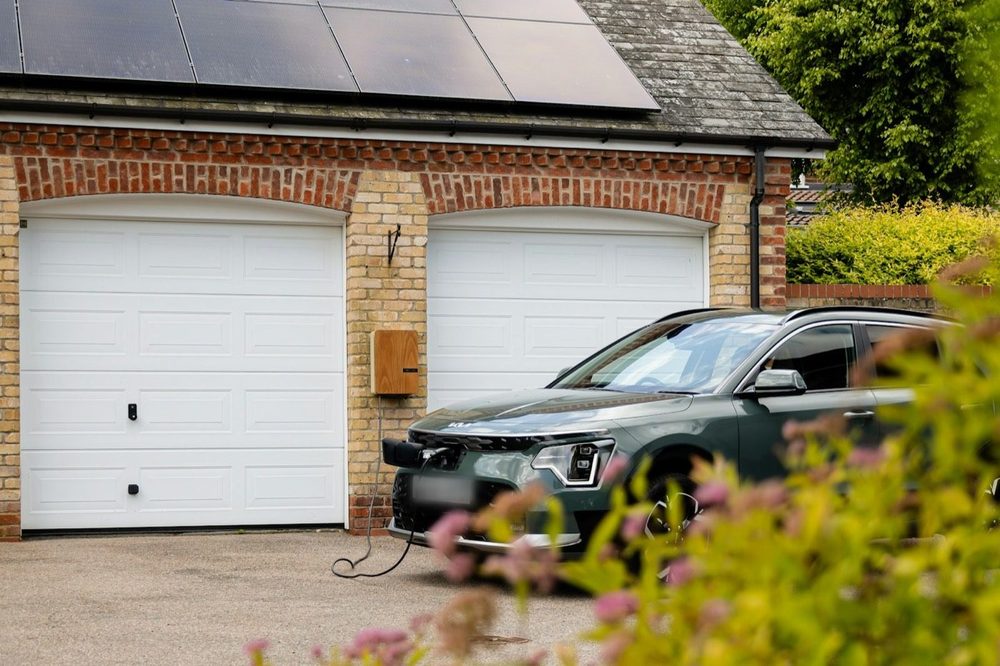
A house with solar panels on the garage roof and an electric car charging on the driveway
Panels on the roof, car underneath. The cheapest kilowatt-hour is the one you didn't have to buy.

Illustrative photos.

Typical installs

Six situations we run into most often

These aren't specific past jobs — they're representative scenarios with realistic technical parameters, so you can spot the one closest to yours and know what to expect. Photos of completed installations will be added here once we have them.

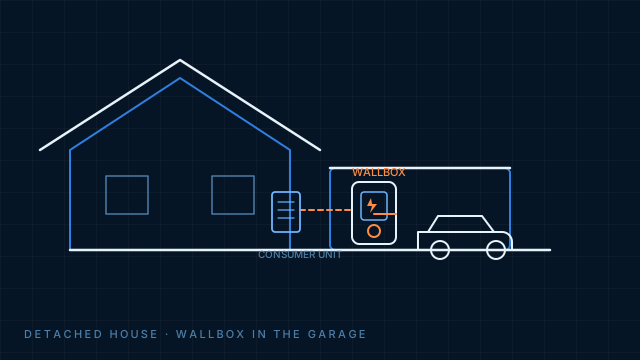
11 kWDiagram: wallbox installed in a house garage
House

Wallbox in the garage

The shortest and cheapest option

The consumer unit is in the garage or an adjoining utility room, and the supply runs a few metres in surface trunking. Installation and inspection typically finish within a single day.

Power
11 kW (3× 16 A)
Cable run
up to 5 m
Complexity
low
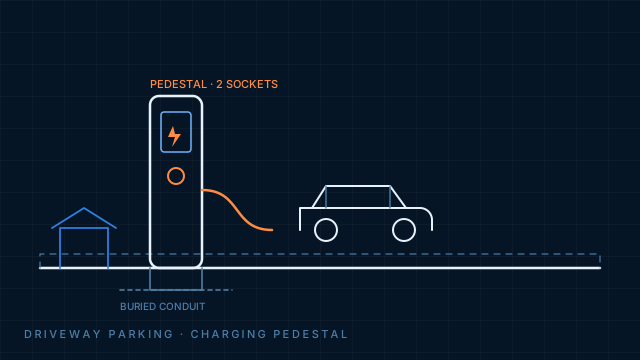
7.4 kWDiagram: charging pedestal at a driveway parking spot
House

Pedestal at a driveway spot

When the car isn't parked in a garage

The car sits in the yard or by the driveway. The supply runs in a buried conduit, which means digging — usually the single most expensive item in the job. The pedestal can carry one or two charging points.

Power
7.4 kW (1× 32 A)
Cable run
15–40 m, trenching
Complexity
higher — groundwork
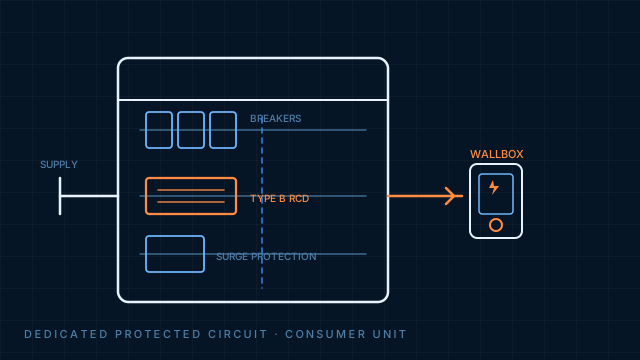
TYPE BDiagram: dedicated protected circuit in a consumer unit
House

Older consumer unit with no spare room

More common than you'd think

Houses from the 1990s often have a full consumer unit without the right type of RCD. Before the wallbox can be connected, the unit usually needs extending or replacing — factor that into the budget.

Added
breaker, RCD, surge protection
Fix
extension or replacement
Complexity
medium
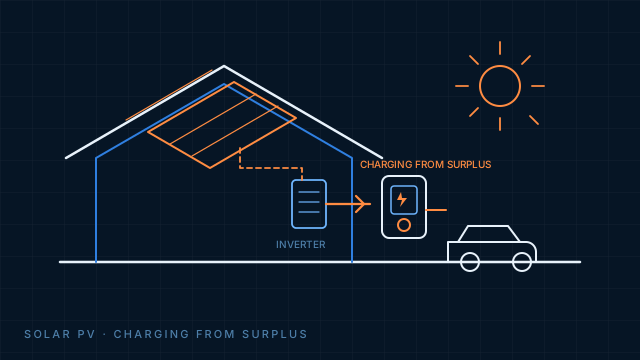
PVDiagram: EV charging from solar PV surplus
House

Charging from solar PV surplus

The most interesting option to run day-to-day

A smart wallbox charges preferentially from surplus generation that would otherwise go to the grid at the feed-in tariff. It needs metering on the main supply and compatibility with your inverter — we check both during the survey.

Requires
metering on the supply
Control
surplus-led
Complexity
medium
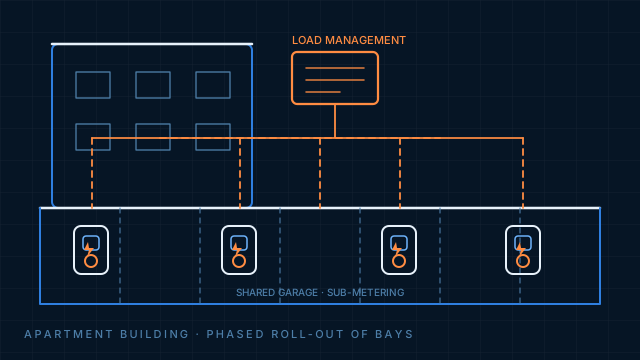
HOADiagram: charging bays in an apartment building's underground car park
Apartment building

Underground car park with load sharing

A design built for the future

A building's main supply can't feed ten chargers running flat out at once. The fix is a backbone circuit with load management and sub-metering, which bays connect to one by one as owners buy electric cars.

Key factor
supply capacity
Metering
sub-metered, per bay
Requires
owners' vote
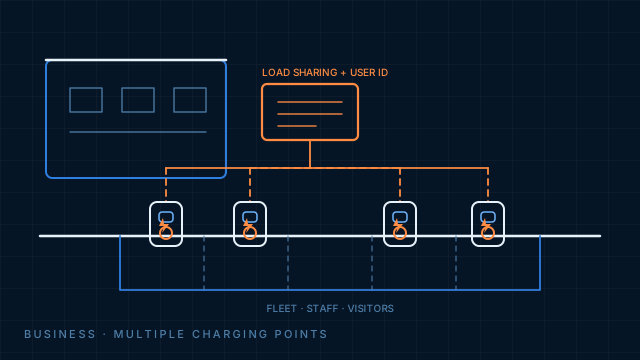
4+ POINTSDiagram: business car park with multiple charging points
Business

Company car park

Fleet cars, staff and visitors

Several charging points sharing the available power, plus user identification by card or app. You get consumption records in a format your accountant can actually use.

Control
load sharing
Identification
card or app
Output
billing-ready records

An indicative price in two minutes

Five questions and we'll tell you what we'd suggest for your property and roughly what it costs. We don't ask for your contact details — only when you want an exact figure.

Price

What it costs

Most firms in this trade hide their pricing until you call. Here are indicative ranges upfront, so you know what you're getting into before you contact us. The final figure comes after the site survey — and then it doesn't move.

Straightforward
from CZK 28,000

Consumer unit within 5 metres, spare capacity in the board, adequate supply. Typically a house garage. Done in a day.

Most common
from CZK 38,000

Cable run of 10–25 metres, board extension, new breaker and RCD. Surface trunking or chased into the wall.

Complex, HOAs, business
individual quote

Trenching and buried conduit, several charging points with load sharing, sub-metering, capacity increase with the grid operator.

What makes up that price

So you can see nothing is invented. These ranges reflect the normal state of the market — your figure depends on what the survey finds.

11 kW wallbox
CZK 12,000 – 25,000
Breaker, type B RCD, cabling
CZK 3,000 – 8,000
Electrician's labour
CZK 5,000 – 10,000
Commissioning inspection
included

Higher output (22 kW), a smart charger with metering and solar-surplus control, or a longer cable run will push the figure up. If you add the items up you will get less than the ranges above — the price also covers travel, consumables, the commissioning inspection and the grid-operator paperwork.

12 %

VAT instead of 21 %, when you buy the installation as one job

On a completed residential building, wallbox installation falls under the reduced VAT rate as construction and assembly work. The condition is that you acquire the charger together with the installation as a single job rather than separately as goods, and sign a declaration about the building type. On a CZK 38,000 job that's a difference of roughly three thousand.

Buy the wallbox yourself online and order the fitting separately, and the reduced rate doesn't apply — which is why taking it from one supplier pays off.

Site survey and quote

We visit, inspect the consumer unit and the parking spot, and you're left with a document you can use to compare us against anyone else.

Free

The quote is valid for 30 days and is final — what's in it is what you pay.

Book a survey
  • Distance from the consumer unitThree metres in a garage versus thirty metres across a garden to a driveway spot. The most common source of price difference.
  • How the cable is routedSurface trunking is the cheapest option; chasing into walls or trenching in the ground adds to the labour cost.
  • Condition of the consumer unitIs there room for new breakers and an RCD? An older unit sometimes needs extending or replacing.
  • Whether capacity needs increasingIf the supply can't take the extra load, add negotiation with the grid operator and a fee for the increased reserved capacity.
  • Which wallbox you chooseFrom a simple charger with no display to a smart one with metering, an app, and surplus-led charging from solar PV.
Grants

Support for a charging point is often available

The conditions change with every funding round, and the rules differ for a house, an HOA and a business. That's why we tell you what's currently open and whether you qualify at the site survey, rather than quoting a figure here that won't be valid next month.

Houses

A charging point is a supported measure under the Czech "Nová zelená úsporám" programme, but three conditions rule most applicants out:

  • Only alongside another measure — a wallbox on its own doesn't qualify. It's most often paired with solar PV.
  • The charger must support dynamic load management — cheap models without it don't count.
  • The parking space must be yours — on the property or inside the building, not publicly accessible.

Apartment buildings & HOAs

Dedicated calls with per-point funding are usually opened for apartment buildings. HOAs generally also need an owners' vote, which the HOA arranges itself.

Businesses & the self-employed

Businesses draw on different funding sources than households — charging-infrastructure calls are run, for instance, by the Modernisation Fund or EU operational programmes. Typically more generous, but with heavier paperwork.

We'd rather tell you upfront if you won't qualify.

Current reporting puts the support at CZK 15,000 per charging point, up to two points per house and up to half of eligible costs. Treat the figure as indicative — in June 2026 the programme shifted mainly from direct grants to an interest-free loan, and conditions change between rounds. Check the current state at novazelenausporam.cz, or leave it to us and we'll confirm it as of your survey date. If you don't qualify, we'll say so straight away — not after the installation.

Legal requirement

Non-residential buildings with car parks need charging by January 2027

This does not apply to family houses. But if you manage an office, a business site, a hotel or a compound with a larger car park, Czech building law gives you just under a year — and it applies even if nobody on site drives an electric car yet.

Who it applies to

The owner of a non-residential building that is heated or cooled and has more than 20 parking spaces. In practice: offices, shopping centres, production and warehouse sites, hotels, healthcare facilities and public authorities.

What has to be in place

One of two options:

  • At least 1 charging point per 10 spaces — a 40-space car park needs four of them.
  • Or ducting for at least half the spaces — groundwork without the chargers themselves, the cheaper route.

By when

By 1 January 2027. A deferral to 1 January 2029 applies only to owners who installed at least one charging point between 28 May 2022 and 28 May 2024. Separately, cabling for half the spaces is required by 1 January 2033.

Get in touch before autumn.

The law says “where technically feasible” — and that is exactly what needs checking early. Larger car parks often outgrow the existing connection, and raising the reserved capacity with the grid operator takes months, not days. We will come out, work out how many points you need and tell you whether the capacity can carry them. The site survey and quote are free.

Book a car park survey

The duty is set out in Section 167(e) of Act No. 283/2021 Coll., the Building Act, implementing the EU Energy Performance of Buildings Directive. An implementing decree sets the detailed conditions. This is orientation, not legal advice — have the scope assessed for your specific building.

FAQ

What people ask us most often

Can't I just charge from a regular socket?

For an occasional top-up, yes. As a permanent solution, no. A standard socket isn't designed to carry a load close to its maximum for hours at a stretch — the contacts overheat, and this is one of the most common causes of fires linked to EVs. Socket charging is also slow: an 11 kW wallbox delivers roughly four times as much energy overnight.

How long does installation take?

For a house with the consumer unit in the garage, typically one working day including the inspection. If the cable needs to run across the whole house, walls need chasing, or trenching is required, allow two days. For apartment buildings and businesses it depends on scope — we'll confirm the timeline in the quote.

Do I need a permit? What if I live in a flat?

For a house owned by the applicant, it's usually enough to notify the grid operator — PREdistribuce in Prague — and we file that on your behalf. In an apartment building it's different: the work affects common areas, so it needs the HOA's consent, normally via an owners' resolution. Getting that consent is up to the owner or the HOA committee; we install once it's approved.

Will the breaker trip if I charge and turn on the oven at the same time?

That's exactly what dynamic load management prevents. The wallbox continuously monitors how much current the rest of the house is drawing and automatically reduces its own output. When the house is cooking and doing laundry it charges more slowly; overnight it ramps up to full power. Without this feature, a weaker supply really could trip the main breaker.

Is the inspection actually required? Nobody's offered me one before.

A commissioning inspection is mandatory for new electrical installations, and skipping it on a wallbox is not worth the risk. It's the only document proving the installation was done safely — and if something did go wrong, the inspection report is the first thing an insurer asks for. With us, it's included in the price, not an add-on.

Can you connect the wallbox to solar PV?

Yes. Smart wallboxes can charge preferentially from surplus generation that would otherwise be exported to the grid at the feed-in tariff. That needs metering on the main supply and compatibility with your inverter — something we check at the site survey, before you buy a charger.

Which charger should I buy?

Survey first, purchase second — not the other way round. We've seen a wallbox bought on a good deal turn out to be the wrong fit for the property's supply more than once. At the survey we'll recommend a specific type based on what your supply can carry, whether you have solar PV, and whether you need consumption metering. We can supply the charger, or you can buy your own.

How far do you travel?

Prague and roughly 30 km around it. Further by arrangement — it's usually worth it for a larger job, less so for a single charger. Tell us where you are and we'll say straight away whether we can reach you.

Contact

Send us a message — we'll reply within 24 hours

Just a few details. The more you tell us now, the more precisely we can advise you on the phone — and the shorter the site survey will be.

Get in touch

+420 605 292 387 Mon–Fri 8:00 – 18:00
info@nabijecky-praha.cz We reply within 24 hours
Prague and surrounding area Prague 1–22, Říčany, Černošice, Brandýs, Jesenice, Hostivice and up to 30 km beyond

We only use your details to handle your enquiry. We never share them with anyone else — how we handle your data.